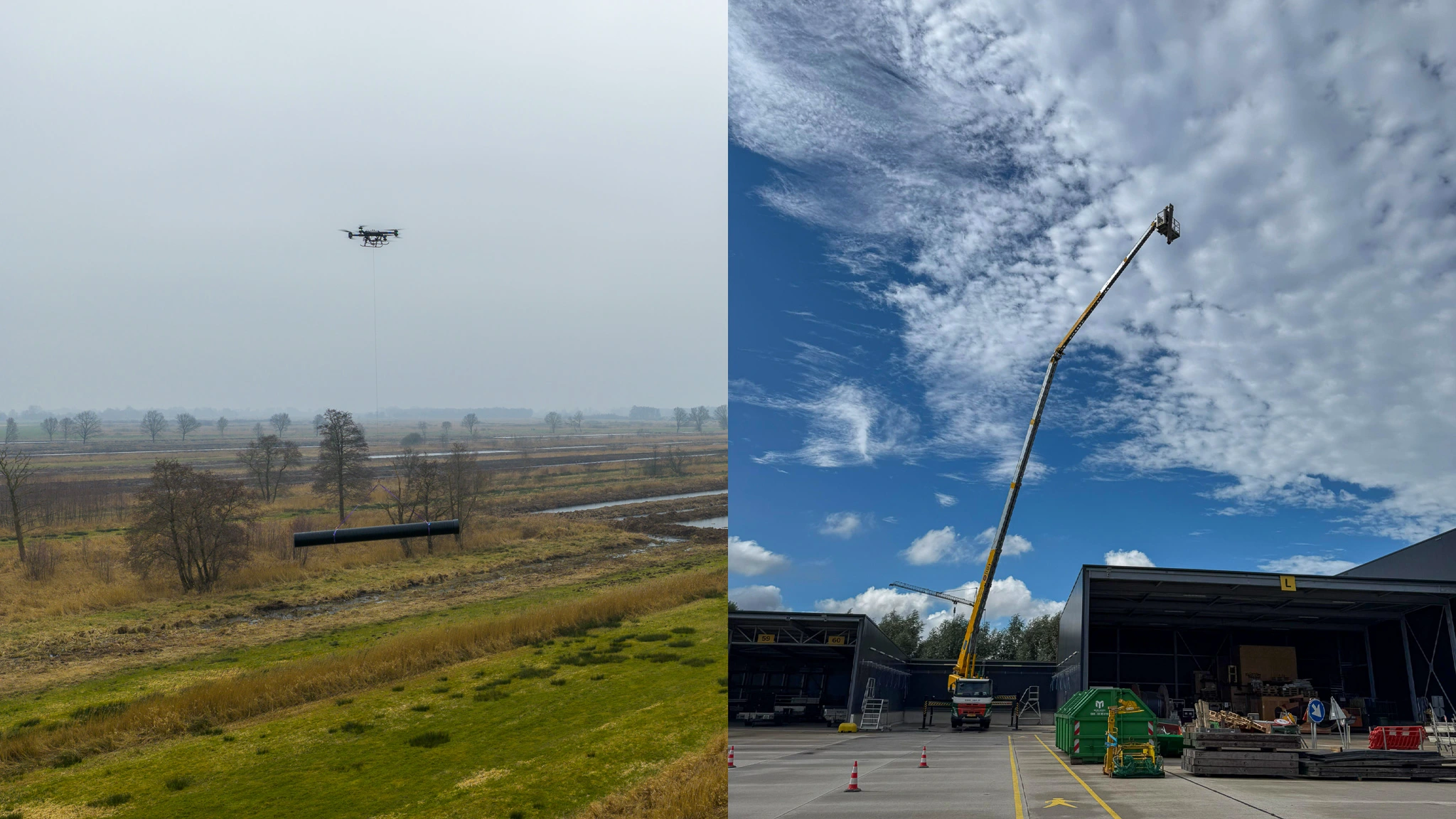
Working at height is one of the most dangerous activities in construction and industry. Falls account for a significant share of serious workplace accidents each year. Every time fewer people need to be at height during a lifting job, that's a gain. Drones contribute to that in a concrete way.
Who is normally present during a lifting job?
In a traditional lifting operation, people are active on multiple levels at once. Riggers on the ground, mechanics on the roof or platform guiding the load, and an operator coordinating communication. Every person in or near the operational zone is an added risk factor. When setting down a load on a platform, things occasionally go wrong: an unexpected gust, a misread hand signal, a swing in the load.
How a drone shrinks the work zone
A heavy-lift drone positions the payload on its own. The mechanic on the roof doesn't need to receive or stabilise the load during lowering. The drone does the precise work. The mechanic steps in once the load is safely down.
That reduces risk. It also reduces coordination errors: less radio traffic between ground and roof, fewer people watching the same payload at once and fewer moments where something can go wrong.
At a Drone Lift operation
- The operational zone is fully cordoned off
- Nobody enters the zone during the flight
- A safety brief takes place beforehand
- Roles are clearly assigned before the drone takes off
Example: climate unit on a rooftop
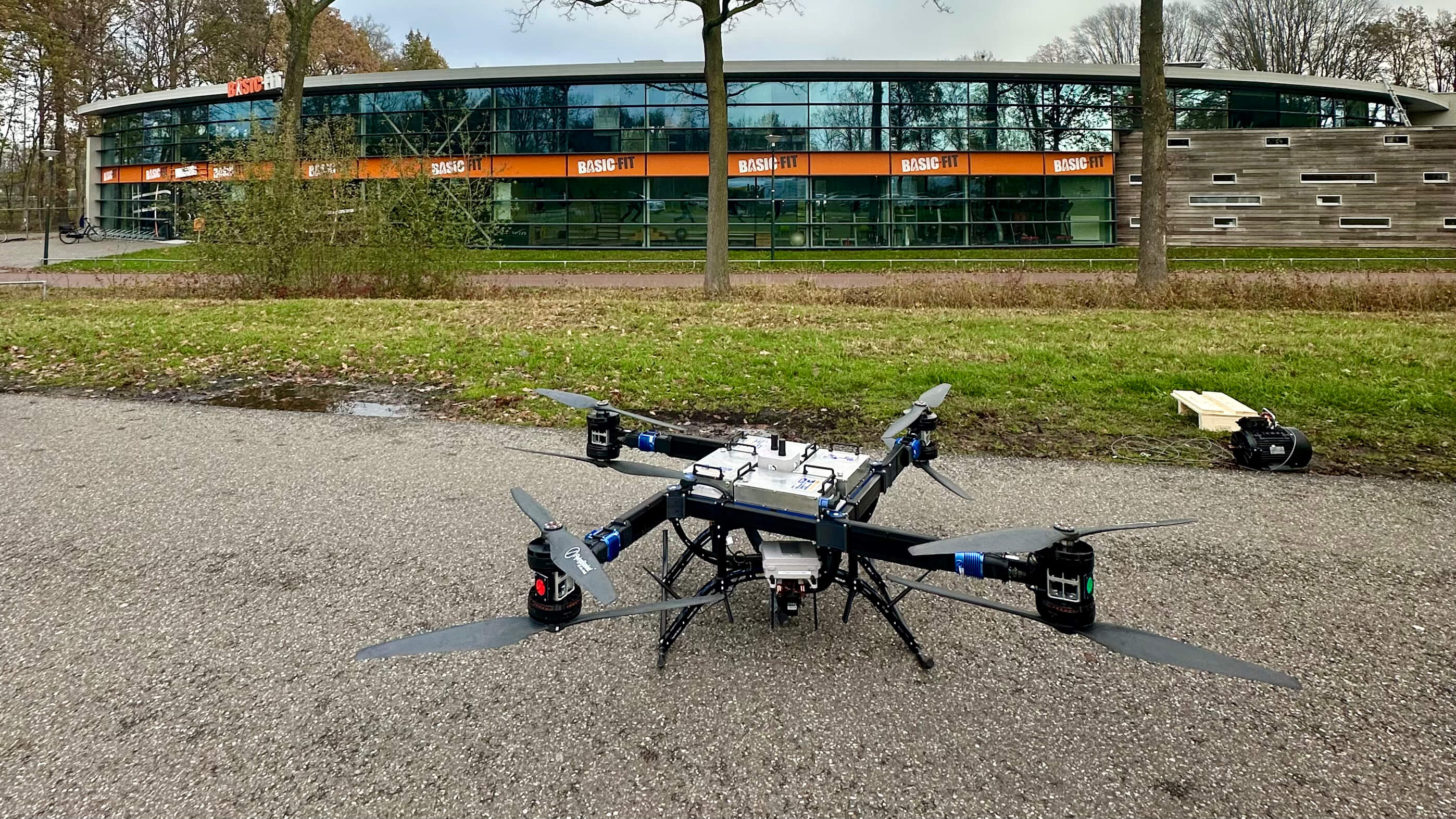
At the Schijndel project, Drone Lift installed a climate unit on the roof of a Basic-Fit. The traditional approach would have had riggers on the roof to receive and guide the unit while it hung from the hook. With the drone, the unit was positioned above its destination and set down without anyone on the roof during the flight. The ground team stayed at a safe distance.
A further benefit: the client carries no liability for personnel working on their roof while lifting is in progress.
VCA* as the foundation
Drone Lift holds VCA* certification, which means a documented safety management system, location-specific risk analyses, procedures for unexpected situations and a clear division of responsibilities. On industrial sites and construction areas where VCA* is required, Drone Lift can work without restriction.
Working in a sector where occupational safety is a priority? Get in touch to discuss how a drone operation fits within your safety policy.