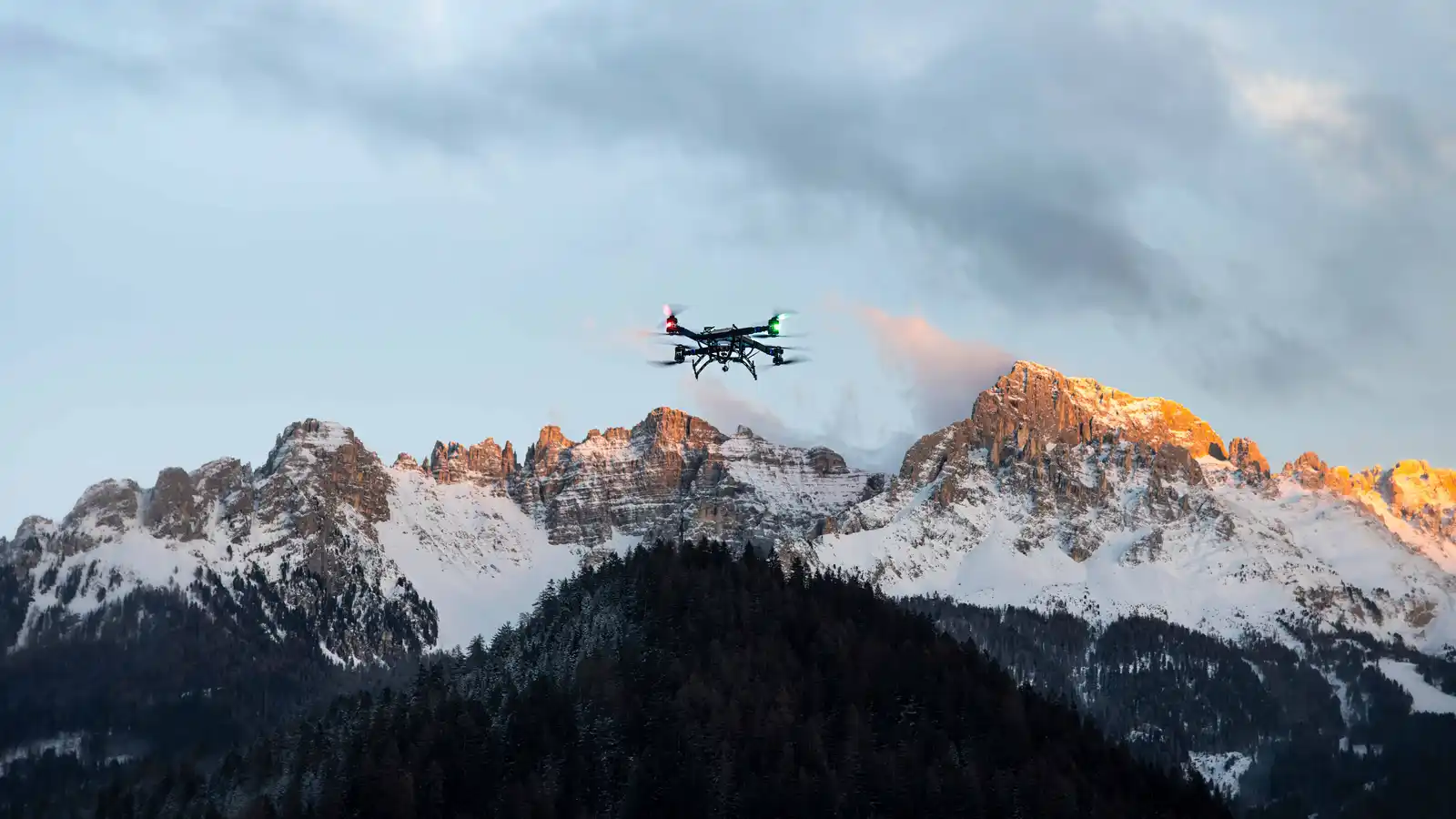
Heavy-lift drone used for powerline cable stringing
Commissioned by TenneT, we ran a pilot in Germany to assess whether drones are the future of the cable stringing process for high-voltage pylons.
Deploying heavy-lift drones
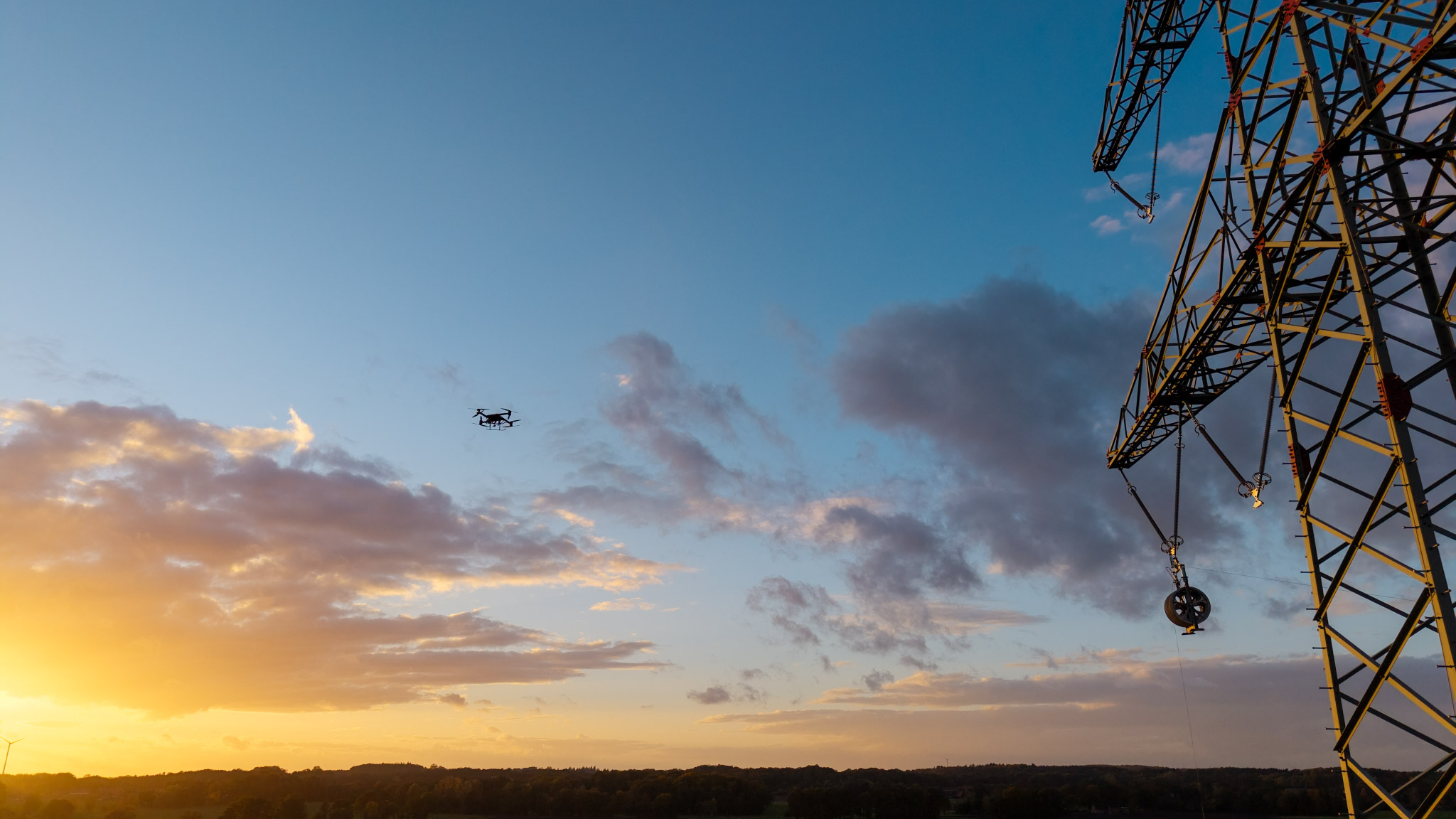
Commissioned by grid operator TenneT, we deployed our heavy-lift drone in Germany for a test flight within the cable stringing process for power pylons. The goal of the pilot was to attach the pilot line, the first line that runs through the pylons, in a controlled manner.
Using the heavy-lift drone, we successfully pulled the line through the structure. This process demands accuracy and stability, both areas where our FlyingBasket FB3 excels.
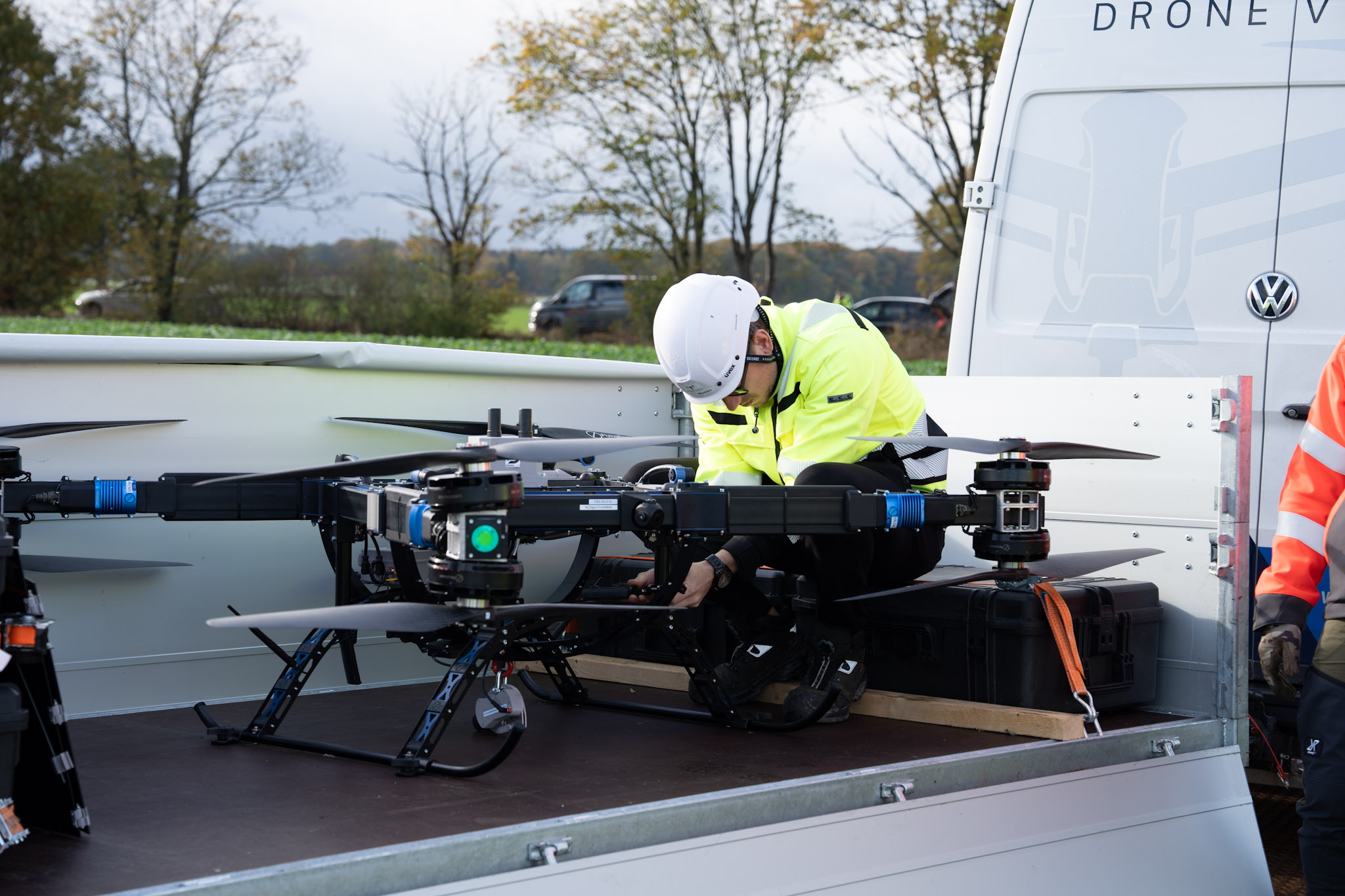
Preparation, crew and setup on site.
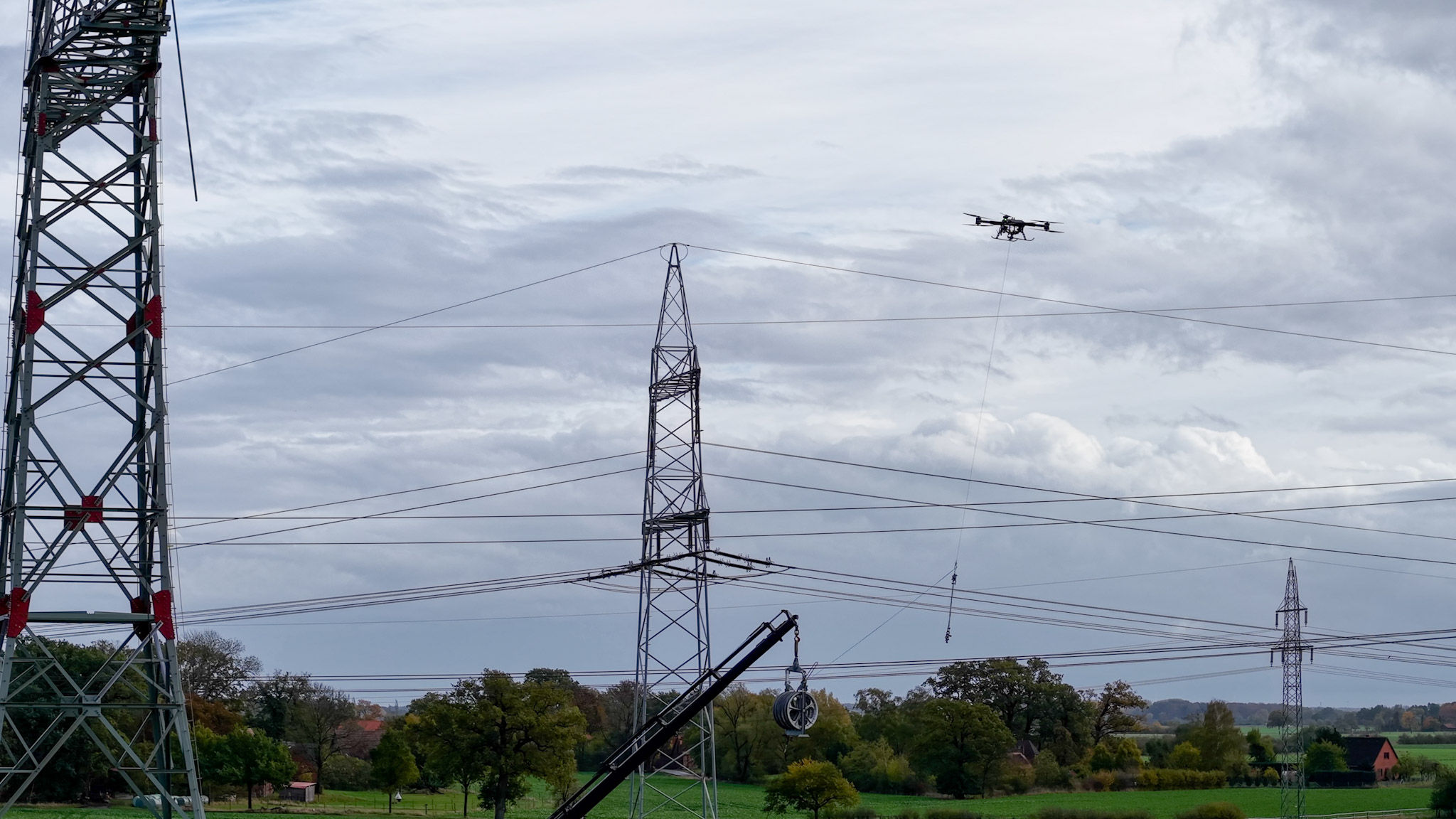
Work area and cable situation around the pylon.
An efficient and safe alternative
Traditionally, this process involves a helicopter, intensive manpower and temporary structures. By using a heavy-lift drone, the workflow becomes more streamlined and several limiting factors can be removed thanks to the drone’s flexibility and ease of deployment.
Benefits of using a heavy-lift drone:
- Reduce unnecessary costs
- Lower the risk of workplace accidents
- Shorten overall lead time
Plan a pilot in your area?
Share the location and what needs to be positioned or guided within the stringing process. We’ll explore together how a drone can make the work safer and more efficient.
Get in touch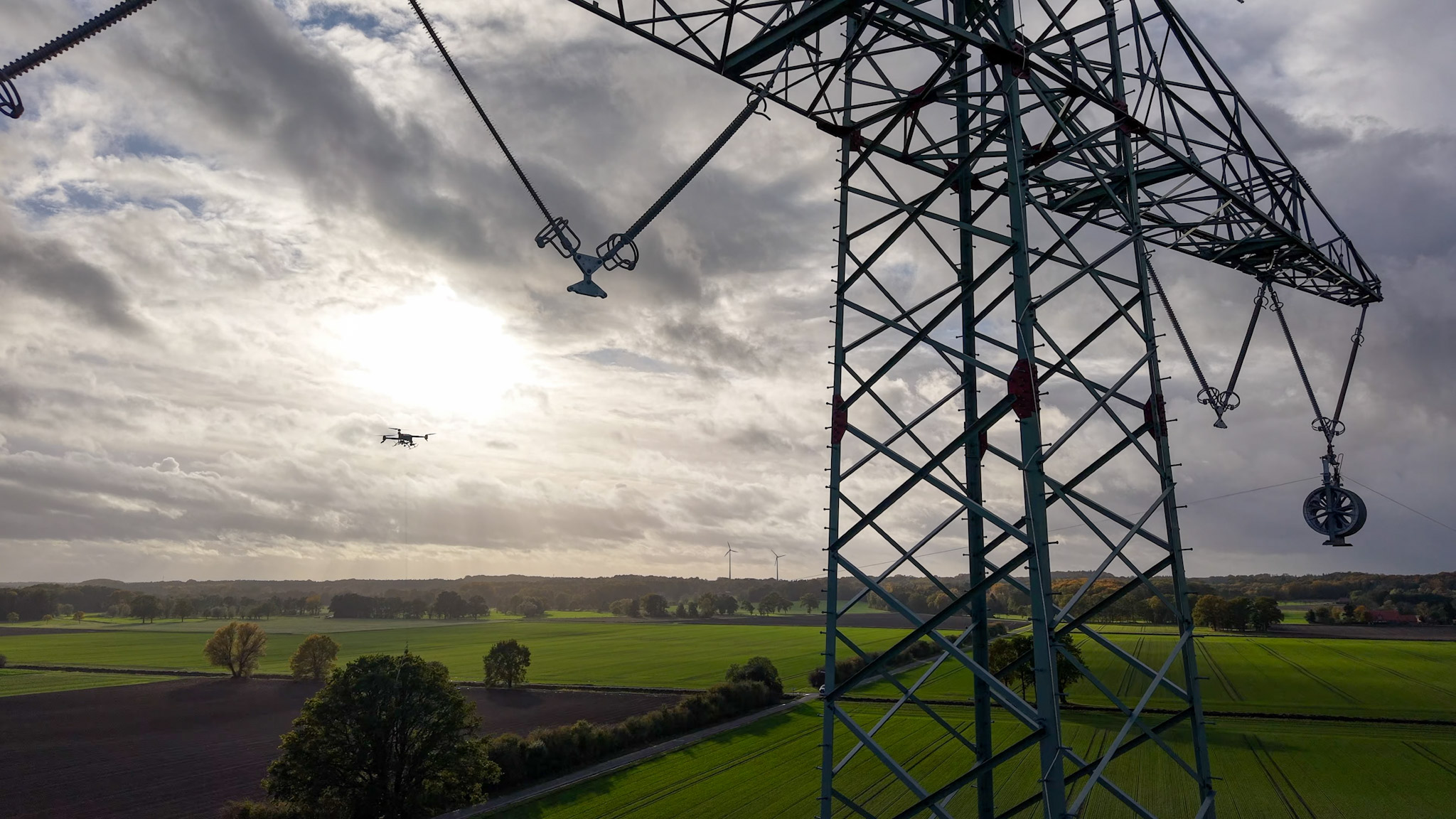
Heavy-lift drones in the energy sector
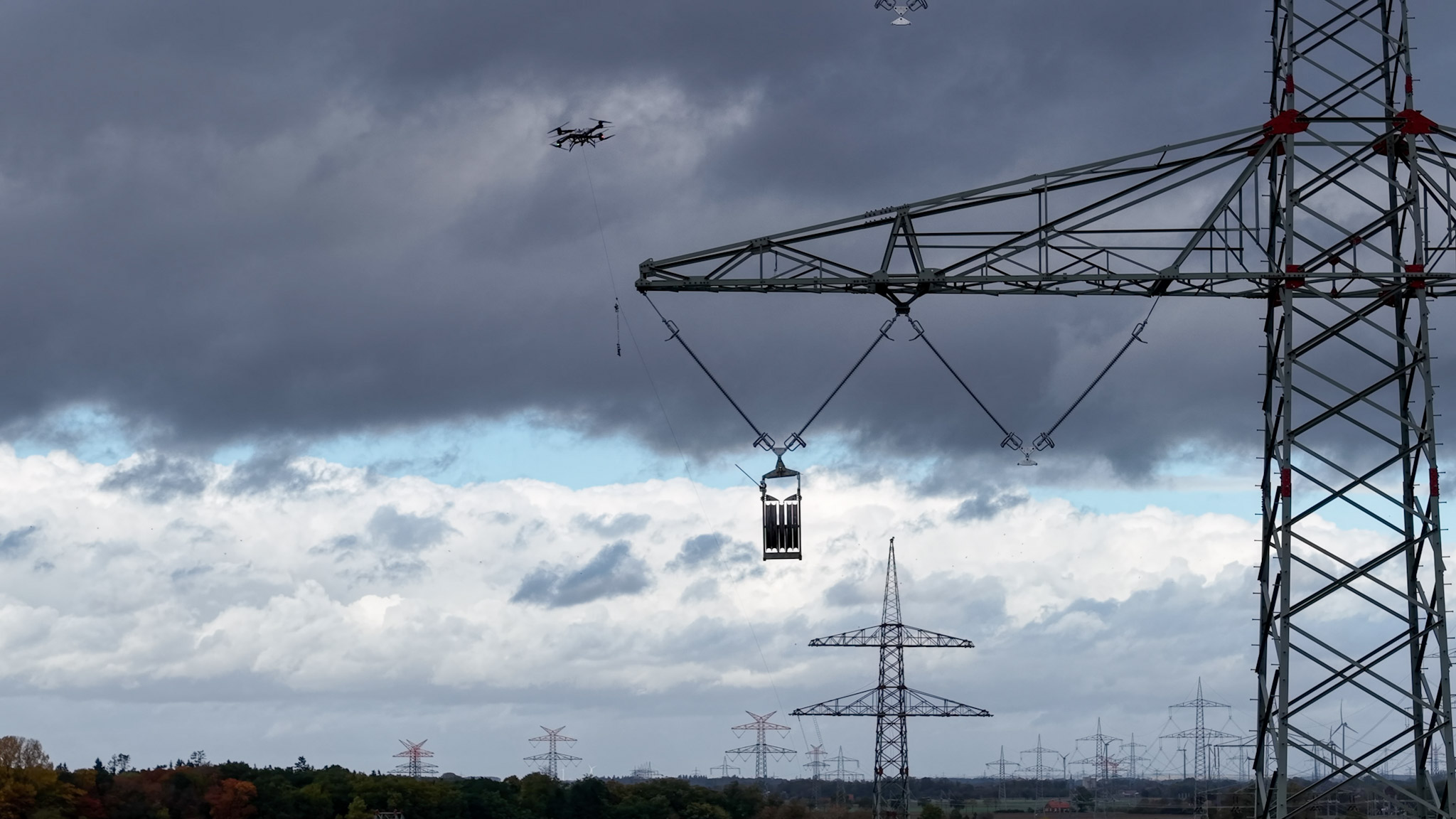
This project with TenneT shows how broad the applications of heavy-lift drones are in the energy sector. From pulling the first pilot line through high-voltage pylons to supplying wind turbines onshore and offshore.
Curious how a drone can be a more efficient option for your project? Get in touch and we’ll look at what’s possible.
Wondering what heavy-lift drones could mean for your project?
Send us the location and a short description of the job. We’ll quickly assess whether drone deployment is a good fit.
Get in touch