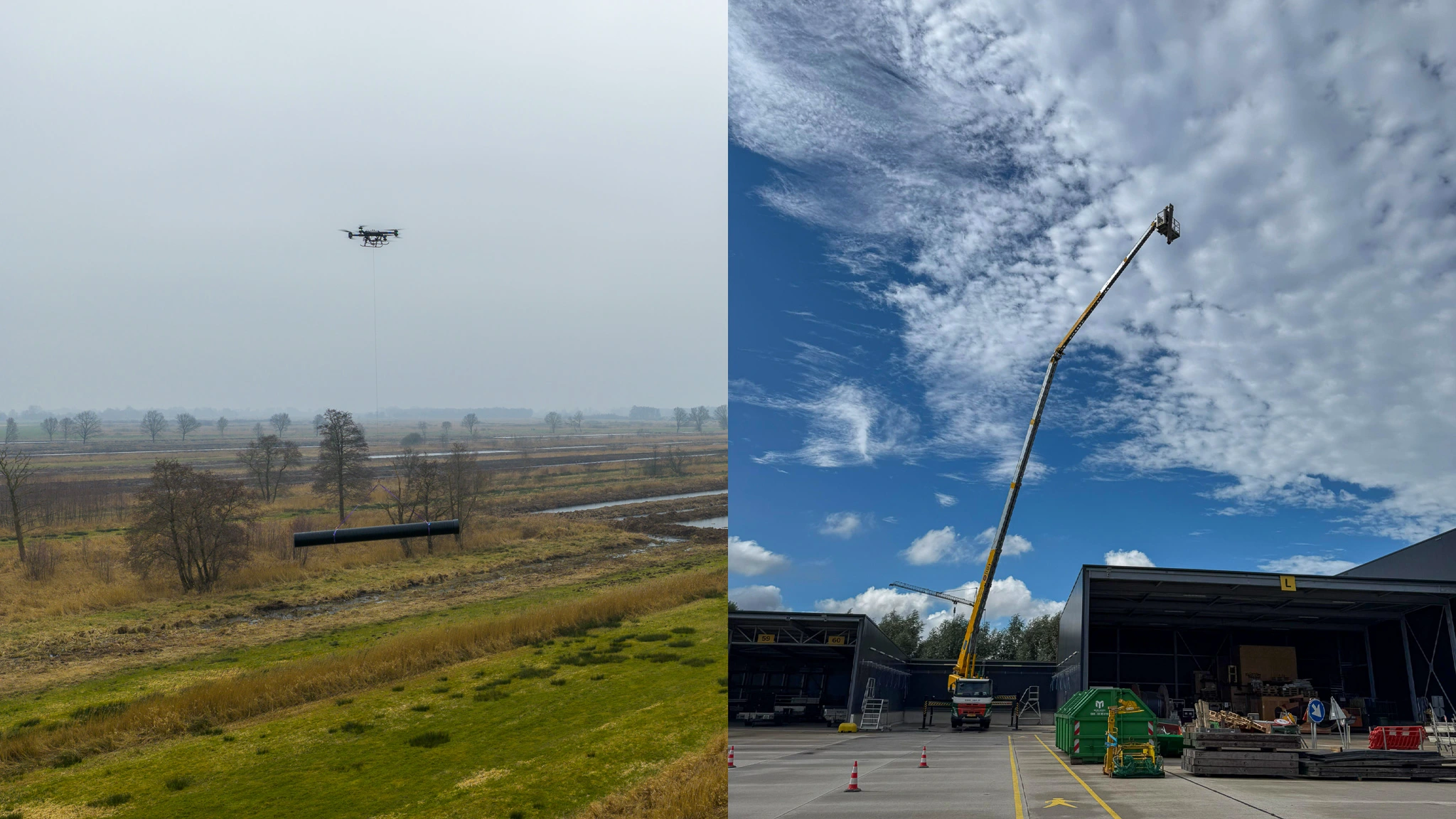
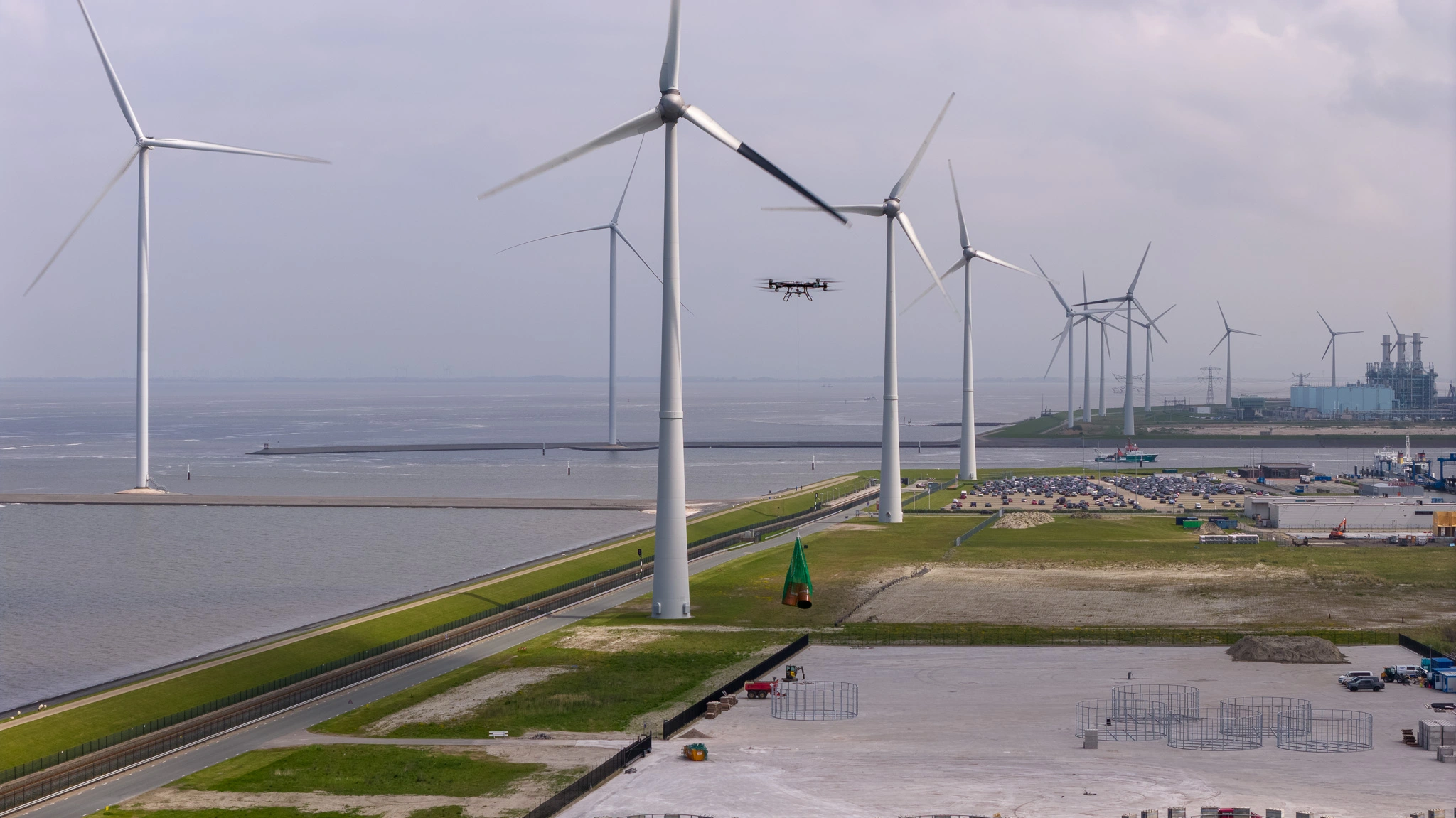
Offshore wind farms are growing in size and capacity, but logistics remains one of the biggest challenges. Service vessels, offshore cranes and helicopters are expensive, slow and weather-dependent. Heavy-lift drones offer a fast and flexible alternative for a growing share of these tasks.
1. No waiting times for service vessels
Booking a service vessel typically takes several days to weeks of preparation, plus the sailing time to the location. A heavy-lift drone, provided SORA-certified and well prepared, can typically be deployed within 48 hours. In urgent maintenance situations, this difference means a turbine stands still for days versus one that is back online within a day.
2. Direct delivery at the turbine
A drone doesn't land on the platform, it places the payload exactly where it's needed: at the nacelle, on the service platform or at the tower base. This eliminates the handling step of moving goods from the vessel to the turbine. Fewer handling steps means lower risk of damage and less working time for technicians at height.
3. Up to 200 kg payload
With the FlyingBasket FB4, payloads up to 200 kg can be transported. This opens the door to heavy spare parts, toolboxes, bulk lubricants and small electrical components. Much routine turbine maintenance can thus be fully supplied by drone.
Typical payloads for offshore wind
- Toolboxes and test equipment
- Lubricants and fluids
- Small electrical and mechanical components
- Personal protective equipment and safety materials
4. Independence from sea conditions (to a degree)
Service vessels are limited by wave height, above 1.5 to 2 metres, many vessels are non-operational. Drones are limited by wind speed. The FlyingBasket FB3 operates up to 30 m/s wind; the FB4 up to 20 m/s. In many situations where a vessel cannot sail, a drone can fly, increasing operational flexibility.
5. Lower total costs for the right applications
A helicopter costs €5,000 to €15,000 per hour including crew. A day-rate service vessel quickly runs to €10,000 or more. For delivering relatively small but critical payloads, a heavy-lift drone is significantly cheaper in total cost, especially when sailing time, waiting and handling costs are factored in.
Conclusion
Heavy-lift drones don't replace the complete service vessel, but they complement it perfectly for cases where speed, access and cost are critical. As the technology matures and regulations adapt, the drone's share of offshore wind logistics will only grow. Drone Lift is already operational in this market today.